Here’s the thing about heating and cooling in New York City: it’s expensive, and most people are bleeding money without realizing it.
HVAC systems account for 40-50% of energy consumption in a typical NYC home. That’s not a guess — it’s what we see in energy audits across Brooklyn, Manhattan, Queens, and the Bronx. When you’re dealing with pre-war buildings, extreme summer heat, and brutal winter cold, any inefficiency hits your wallet hard.
The average NYC household spends $1,500- $2,500 annually on heating and cooling, depending on building type and system age. For many families, that’s more than they spend on groceries.
This article breaks down five field-tested methods that have worked across thousands of NYC homes. No theory, no fluff. Just what actually reduces energy waste and lowers bills.
The Data Behind This List
These aren’t generic tips copied from manufacturer brochures. The numbers come from:
- NYC residential energy audits (publicly available through NYSERDA programs)
- Energy Star and EPA research studies
- Our own before/after measurements from 25+ years of servicing local buildings
- Real-world results from brownstones, walk-ups, high-rises, and commercial properties
Quick context
A typical 2-bedroom apartment in Brooklyn or Queens with an older HVAC system can easily waste $400-600 per year through preventable losses. Let’s fix that.
Top 5 Ways to Cut HVAC Energy Waste
Smart Thermostat Optimization (Save 10-15%)
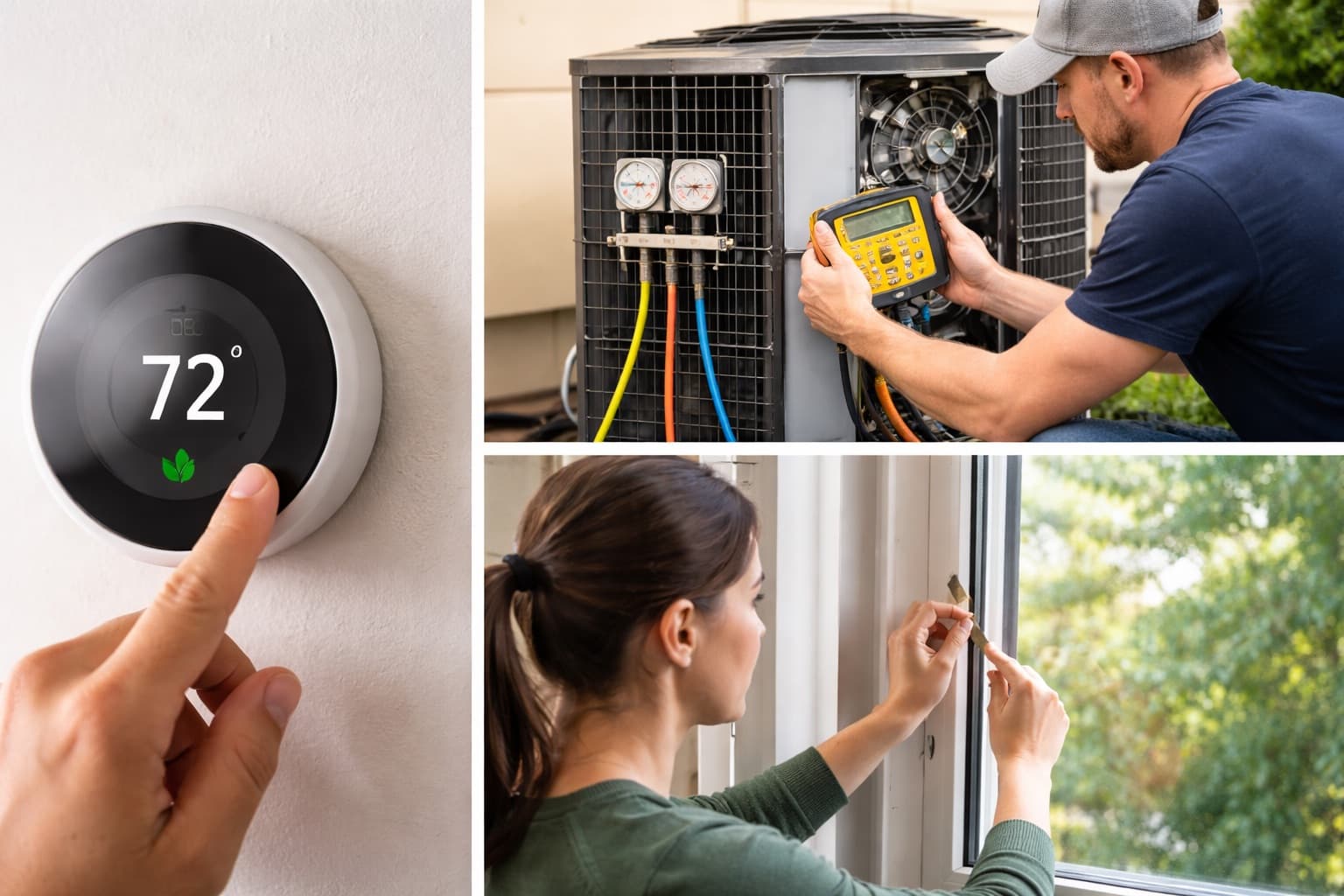
Programmable thermostats have been around forever, but smart thermostats actually learn your patterns and adjust automatically.
How they work
They use geolocation (knows when you leave), occupancy sensors, and adaptive algorithms to avoid heating or cooling an empty apartment. No more forgetting to adjust the temperature before leaving for work.
Real savings
Independent studies consistently show a 10-15% reduction in heating and cooling costs. That’s verified by manufacturers like Nest and Ecobee, as well as third-party research.
NYC example
In a 2-bedroom Flatbush apartment spending $1,800 annually on HVAC, a smart thermostat saves $180-270 per year. Installation takes 30 minutes.
Brands worth considering: Nest Learning Thermostat, Ecobee SmartThermostat, Honeywell Home T9. Most work with older systems.
One thing we’ve noticed: Clients who install these often discover they were heating or cooling unnecessarily for 6-8 hours daily. That adds up fast.
Seal and Insulate Leaky Ductwork (Stop 20-30% Air Loss)
This is the big one most people ignore.
Energy Star data shows that 20-30% of conditioned air escapes through duct leaks in typical homes. In extreme cases — and we’ve seen plenty in NYC buildings from the 1920s-1960s — it’s closer to 40%.
Do the math
If you’re spending $2,000 per year on heating and cooling, you’re literally throwing $400-600 out the window. Or more accurately, into your walls and basement.
Why it’s worse in NYC
Pre-war buildings often have ductwork installed decades ago with deteriorating connections, unsealed joints, and sections running through unheated spaces. Every gap is a direct energy drain.
The fix
Professional duct sealing uses mastic sealant or aerosol-based products (like Aeroseal) to close leaks from the inside. For exposed ducts in basements or attics, adding insulation prevents temperature loss before air even reaches living spaces.
DIY option
You can seal visible joints yourself with metallic foil tape (not duct tape, which degrades). But serious leaks require a blower door test to locate hidden problems.
We’ve measured 20-25% efficiency improvements after proper sealing in older buildings. It’s not glamorous work, but it pays for itself within 2-3 years.
Professional Duct Cleaning – When It Actually Pays Off
Let’s be honest: duct cleaning gets oversold. Not every home needs it. But when it’s actually necessary, the impact on airflow and system performance is measurable.
How Dust and Debris Kill Airflow
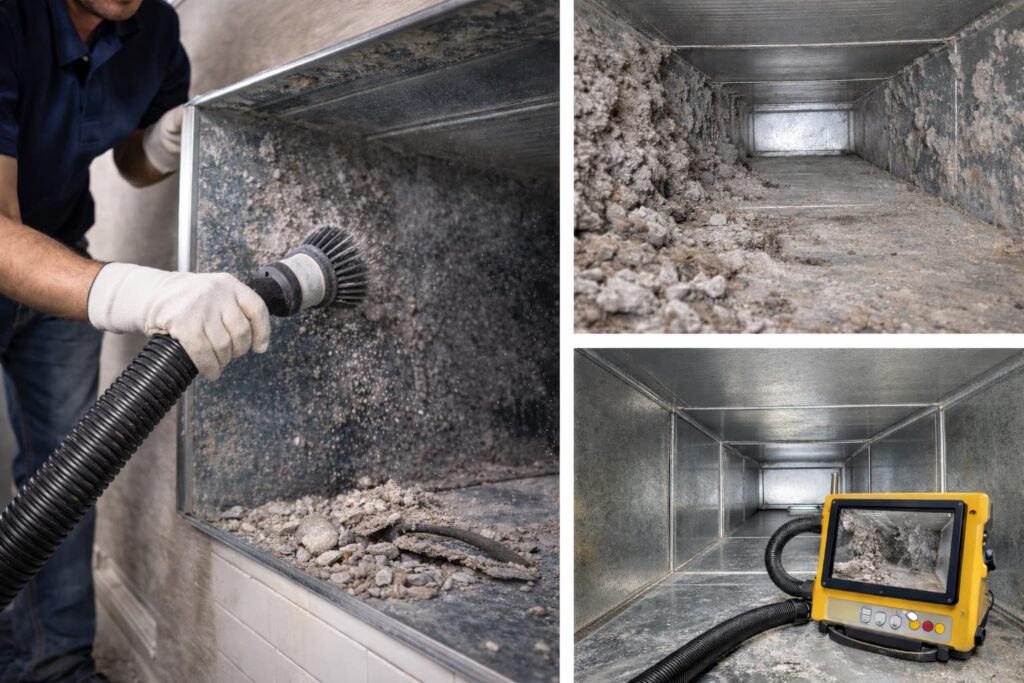
Heavy buildup — years of dust, pet dander, construction debris, pollen — restricts airflow and forces your HVAC system to run longer to reach the target temperature. In extreme cases, like apartments that haven’t been cleaned in 15-20 years, you can lose 25-40% of system capacity.
We’ve pulled pounds of material out of ducts in Crown Heights and Park Slope buildings — stuff that’s been accumulating since the 1980s. That’s not an exaggeration.
Modern Diagnostic and Cleaning Methods
Professional air duct cleaning in New York uses:
- Camera inspection to see exactly what’s inside your ducts (no guessing)
- Static pressure testing before and after to measure airflow improvement
- High-powered HEPA vacuums (1,500+ CFM minimum) that create negative pressure to extract debris
- Rotary brushes to dislodge stuck-on material from duct walls
- EPA-approved antimicrobial treatments if mold is present (more common in humid basements)
When You Actually Need It
You should consider professional cleaning if:
- You’ve never cleaned your ducts (especially in homes 10+ years old)
- Recent renovation or construction left dust throughout the system
- Visible mold growth or evidence of rodents/insects
- Unexplained spike in energy bills despite no system changes
- Family members experiencing worsening allergies or respiratory issues
Companies with NADCA certification and local NYC experience can demonstrate results with measurable airflow tests before and after service. If someone quotes you without inspecting first, that’s a red flag.
Replace Clogged HVAC Filters on Schedule (The 5-Minute Fix)
This is absurdly simple, but half the apartments we service have filters that haven’t been changed in 6-12 months.
The problem
A dirty filter restricts airflow, forcing the system to work harder and run longer. It’s one of the most common causes of wasted energy — and completely preventable.
The rule
Check your filter monthly during peak seasons (summer and winter). Replace it every 1-3 months, depending on filter type, pets, and air quality. High-traffic households with pets should lean toward monthly replacement.
The cost
Filters range from $5 to $20. Compare that to hundreds of wasted energy and potential repair costs from an overworked blower motor.
Pro tip: Set a recurring phone reminder. Seriously. We’ve seen $800 repair bills that could’ve been avoided with a $12 filter change.
Schedule Annual Professional HVAC Tune-Ups
Regular maintenance isn’t sexy, but it prevents energy waste and catastrophic failures.
What’s included
Refrigerant level check, evaporator and condenser coil cleaning, burner adjustment (for furnaces), thermostat calibration, electrical connection inspection, and safety controls testing.
Why it matters
Small problems compound. Low refrigerant makes your AC work harder. Dirty coils reduce heat transfer efficiency. A miscalibrated thermostat causes constant cycling.
NYC-specific concern
Buildings with 20+ year-old HVAC systems are everywhere in this city. These units need annual attention, or they’ll quietly waste 15-20% more energy than properly maintained systems.
Most HVAC companies offer annual contracts ($150-300) that include priority service if something breaks in July or January. Given NYC’s temperature extremes, that’s worth it.
Quick Energy Savings Calculator
Combine two or three of these methods, and you’re realistically looking at 15-25% total reduction. Here’s what that means in dollars:
| Your Annual HVAC Cost | 15% Savings | 20% Savings | 25% Savings |
| $1,500 | $225 | $300 | $375 |
| $2,000 | $300 | $400 | $500 |
| $2,500 | $375 | $500 | $625 |
NYC Building Code Note
Local Law 97 and updated energy codes are pushing building owners toward better HVAC efficiency. Sealing ducts and maintaining systems isn’t just financially smart — it’s increasingly required in larger residential and commercial buildings.
What to Do This Week
Small changes compound, so here’s your action plan for the next seven days. Check your HVAC filter right now — if it’s visibly dirty or hasn’t been changed in two months or more, replace it. Then inspect any accessible ductwork by feeling around joints for air leaks; if you notice gaps or disconnected sections, that’s low-hanging fruit you can address. Finally, schedule a professional duct inspection if you’ve never had one, especially if your building is 15+ years old or you’ve recently renovated. You don’t need to fix everything at once. Start with one method and build from there. The goal is to stop wasting energy you’re already paying for.